Repair advice
OEM vs. Aftermarket Parts: What You Should Know
A clear guide to OEM and aftermarket electronics repair parts, including how quality, availability, and warranty can affect your repair.
Quick answer
Part labels are only one factor. Compatibility, supplier quality, testing, and warranty often matter more to the repair experience.
Before you start
A simple first-response checklist
- Ask which part option fits your device.
- Confirm the expected performance tradeoffs.
- Ask how the repair is tested.
- Get the warranty details before repair starts.
Technician notes
Part labels are not the whole story
OEM parts are made to the original manufacturer specification. Aftermarket parts are made by third parties, and their quality can range from excellent to poor depending on the supplier and component.
The practical question is whether the part fits the repair goal. A trusted technician should explain the options in plain language instead of relying on labels alone.
Technician notes
Match the part to the repair
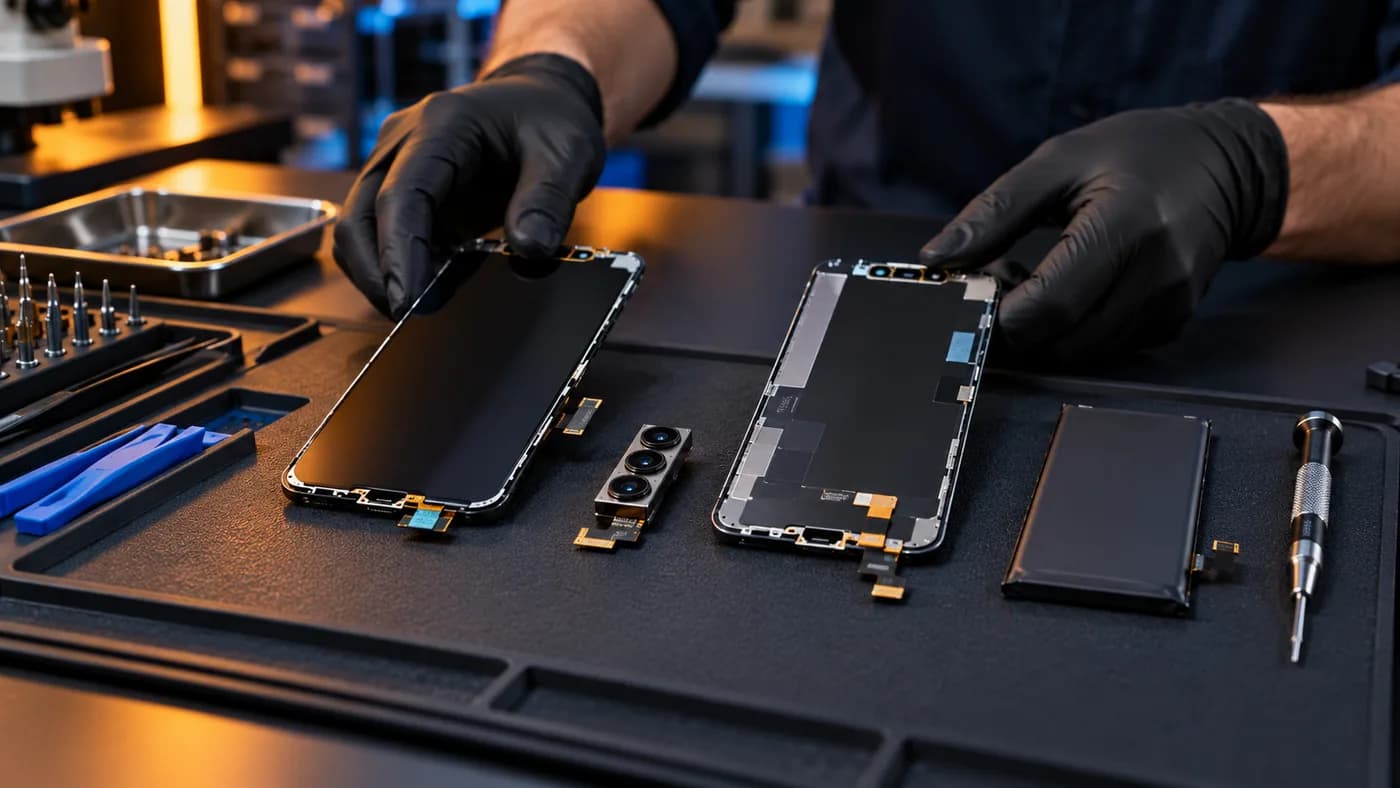
For displays, batteries, cameras, and charging ports, compatibility and quality control matter. The best choice depends on the device, the repair goal, and what is available for that model.
For example, a display choice can affect brightness, touch response, and color. A battery choice can affect runtime and long-term reliability. The right answer is not always the same for every device.
Technician notes
Ask about testing and warranty
A reliable repair includes more than installing a part. Ask how the component is tested and what warranty covers the work. Those answers matter more than a label alone.
A proper final check can include charging, touch, cameras, speakers, buttons, and wireless functions where relevant. That testing gives you a clearer handoff and better peace of mind.
Bring it in sooner if you notice
- • Vague part descriptions
- • No testing process
- • A quote without a warranty
- • Claims that sound too good to be true